
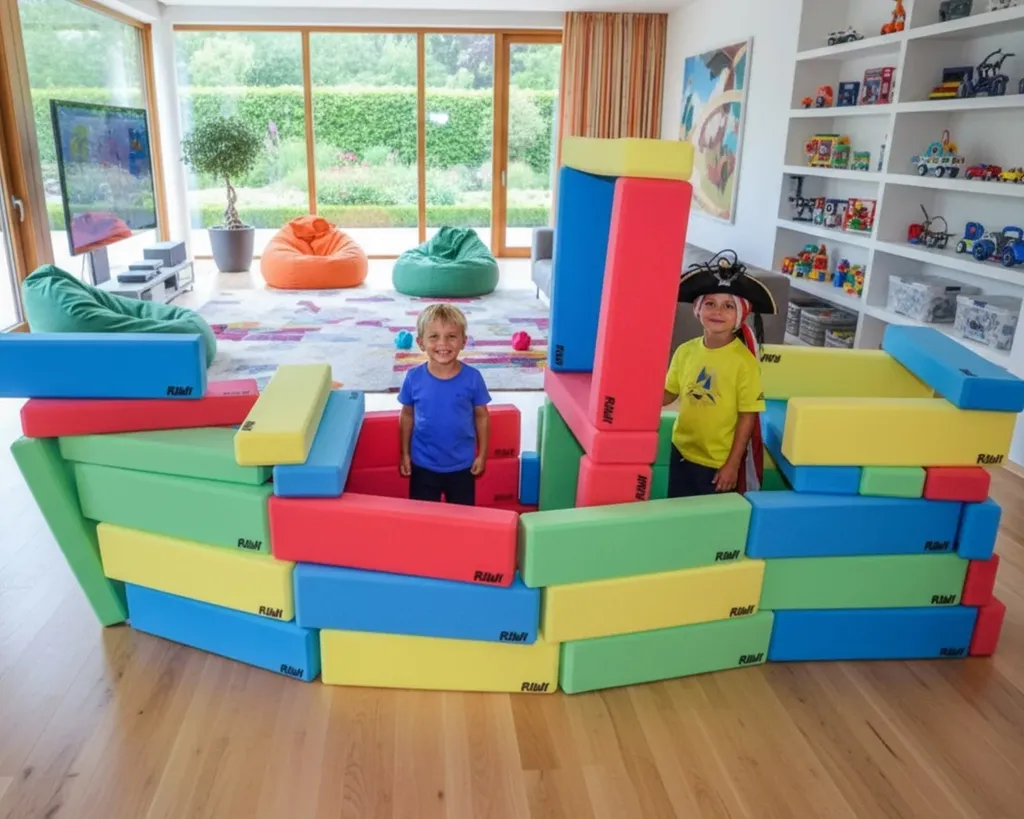
Giant Building Blocks are a simple and engaging way to encourage calm, focused, and creative play indoors. Giant Building Blocks give children the opportunity to construct towers, houses, bridges, forts, and imaginative structures at their own pace. With Giant Building Blocks, children can enjoy hands-on construction without needing complicated instructions or noisy electronic entertainment. For parents, teachers, and caregivers looking to create peaceful activity periods, Giant Building Blocks offer an adaptable play option that combines creativity, concentration, and learning.
What Is Quiet Construction Play?
Quiet construction play focuses on activities that encourage children to concentrate, explore, and create in a relatively calm environment. Unlike highly energetic games, construction gives children time to think about what they want to make and how they can achieve their ideas.
Large building pieces are particularly useful because children can handle them easily while focusing on arranging and stacking. The activity can take place independently or with a small group, depending on the environment.
Creating a Calm Play Routine
A dedicated construction period can become part of a daily routine. Parents might offer building activities after school, while educators can introduce construction during independent activity periods.
A comfortable floor area, organized storage, and a selection of age-appropriate pieces can help children settle into focused play.
Why Giant Building Blocks Encourage Focus
Giant Building Blocks encourage children to concentrate on a physical project. Instead of passively watching a screen, children make decisions about their structures and actively participate in the creative process.
They can choose pieces, test arrangements, and make adjustments. This naturally encourages patience because completing a larger structure often takes several steps. For more information about large building blocks for kids, explore their features, benefits, age suitability, and role in encouraging imaginative and educational play.
Independent Construction
Children can work independently and create structures based on their own ideas. Independent building gives them control over the activity and allows them to work at a comfortable pace.
If a design does not work, they can make changes without feeling pressured to complete a particular model.
Sustained Attention
Building a stable structure requires children to pay attention to how pieces are positioned. They may need to remember their original plan while making adjustments.
This process can encourage sustained attention and provide a constructive alternative to activities that constantly change from one moment to another.
Creative Projects for Peaceful Play
There are many projects suitable for calm construction sessions. The key is to provide open-ended ideas without making the activity overly complicated.
Build a Reading Nook
Children can create a simple structure that represents a reading corner or imaginary library. After building, they can sit nearby with books and create stories about their pretend environment.
Create a Small Village
Children can construct several buildings and arrange them into an imaginary village. They can decide where homes, shops, parks, and roads should be located.
This activity combines construction with storytelling while maintaining a relatively calm pace.
Design a Tower
Tower building is a straightforward activity that can encourage concentration. Children can experiment with different bases and stacking patterns to see how high they can build while keeping the structure stable.
Developmental Benefits of Calm Construction
Giant Building Blocks can support several areas of development while children engage in quiet play.
Fine Motor Coordination
Picking up, carrying, aligning, and stacking large pieces requires controlled hand movements. Children practice coordinating what they see with how they position each block.
The activity can be especially accessible because oversized pieces are generally easier to grasp than very small construction components.
Spatial Reasoning
Construction introduces concepts such as position, distance, size, height, balance, and shape. Children learn by observing how different pieces interact.
They can discover that some arrangements create stronger foundations while others cause structures to become unstable.
Problem-Solving
When a structure falls or does not look the way a child expected, they have an opportunity to solve the problem. They can consider what went wrong and develop a new approach.
This trial-and-error process teaches persistence and encourages children to view challenges as opportunities to experiment.
Giant Building Blocks for Independent Play
Independent play is an important part of childhood because it gives children opportunities to make their own choices. Giant Building Blocks can support this type of play without requiring constant adult direction.
Children can decide what they want to build, how many pieces they need, and when their project is finished.
Encouraging Creative Independence
Adults can provide a starting idea while allowing children to take control of the project. For example, a parent might suggest building a bridge but let the child determine its shape and size.
This approach encourages creative confidence and gives children ownership of their work.
Using Construction Play in Educational Settings
Quiet building activities can work well in classrooms, preschools, libraries, and childcare environments. Educators can incorporate construction into independent learning centers.
Small-Group Building
Small groups can work on shared projects while maintaining a calm atmosphere. Children can assign tasks, discuss designs, and cooperate without turning the activity into a competitive challenge.
Giant Building Blocks provide enough flexibility for children to contribute different ideas to the same project.
Learning Through Observation
Teachers can observe how children approach construction problems. Some children may carefully plan their structures, while others may learn through experimentation.
These observations can provide useful insight into problem-solving approaches, communication, coordination, and creativity.
Creating a Quiet Construction Space
The environment can influence how children interact with construction toys. A designated building area can help establish expectations for calm, focused play.
Choose a comfortable space away from high-traffic areas when possible. Keep unnecessary distractions to a minimum and provide enough room for children to construct safely.
Organizing Materials
Storage bins, shelves, or large containers can keep building pieces organized. Easy access allows children to select what they need without creating unnecessary disruption.
After the activity, children can return the pieces to their storage area. This creates a simple routine and encourages responsibility.
Giant Building Blocks and Imaginative Storytelling
Quiet construction does not have to mean limited imagination. Children can build peaceful pretend environments and develop stories around them.
A collection of blocks might become a cozy house, animal sanctuary, garden, or imaginary school.
Combining Building With Books
Parents and teachers can connect construction activities to stories. After reading a book about animals, children might build an animal shelter. Following a story about transportation, they could create a pretend station.
This approach connects reading, storytelling, construction, and imaginative play.
Choosing the Right Construction Materials
When selecting Giant Building Blocks, consider the child's age, abilities, play environment, piece size, material, and durability.
Lightweight pieces may be easier for younger children to move. Durable materials can be useful in classrooms and other settings where blocks are frequently handled by multiple children.
Safety Considerations
Always choose age-appropriate construction materials and follow the manufacturer's instructions. Inspect pieces regularly for cracks, damage, or sharp edges.
Children should have enough space to build safely, and unstable structures should not be used for climbing unless specifically designed for that purpose.
Keeping Quiet Construction Interesting
Even calm activities can become repetitive if children are given the same challenge every day. Rotating themes can help maintain interest.
One session might involve building houses, while another focuses on bridges, animal habitats, towers, or imaginary libraries.
Giant Building Blocks can be dismantled and reused for completely different projects, making them suitable for repeated creative sessions.
Simple Building Challenges
Parents can introduce challenges such as building the widest wall, creating a stable bridge, designing a house with several rooms, or making a structure for toy animals.
These challenges provide direction without removing children's creative freedom.
Frequently Asked Questions
1. Are Giant Building Blocks suitable for quiet play?
Yes. They can encourage calm, focused construction when children are given a comfortable space and simple, open-ended building activities.
2. What skills can children develop through quiet construction?
Quiet construction can support concentration, coordination, spatial awareness, problem-solving, planning, creativity, and independent decision-making.
3. Can children use Giant Building Blocks independently?
Yes. Children can select their own projects and build independently, allowing them to develop creative confidence and self-directed play skills.
4. Are Giant Building Blocks useful in classrooms?
Yes. They can be incorporated into independent learning centers, small-group projects, STEM activities, and imaginative play areas when appropriate for the children's ages.
5. How can parents keep quiet building activities interesting?
Parents can rotate themes and introduce simple challenges. Building houses, towers, bridges, villages, animal shelters, and pretend libraries can provide fresh ideas while using the same pieces.
Conclusion
Giant Building Blocks provide an effective foundation for quiet construction play that encourages children to slow down, concentrate, and create. Instead of relying on noisy or highly stimulating entertainment, children can spend time designing structures, solving construction challenges, and developing imaginative stories. From independent tower building to collaborative village projects, oversized construction pieces can support creativity, coordination, spatial reasoning, and problem-solving. By creating a comfortable building area, organizing materials, and introducing varied challenges, parents and educators can make calm construction an enjoyable part of everyday play. With their open-ended possibilities, Giant Building Blocks can help children discover that quiet play can still be imaginative, purposeful, and deeply engaging.